Georgia has become one of the fastest-growing destinations for international medical education in recent years. Thousands of Indian students are now choosing Georgia for MBBS because of affordable tuition fees, modern teaching systems, internationally recognized universities, and English-medium medical education. The country has gained attention among students who want quality medical education abroad at a comparatively lower cost than many private medical colleges in India.
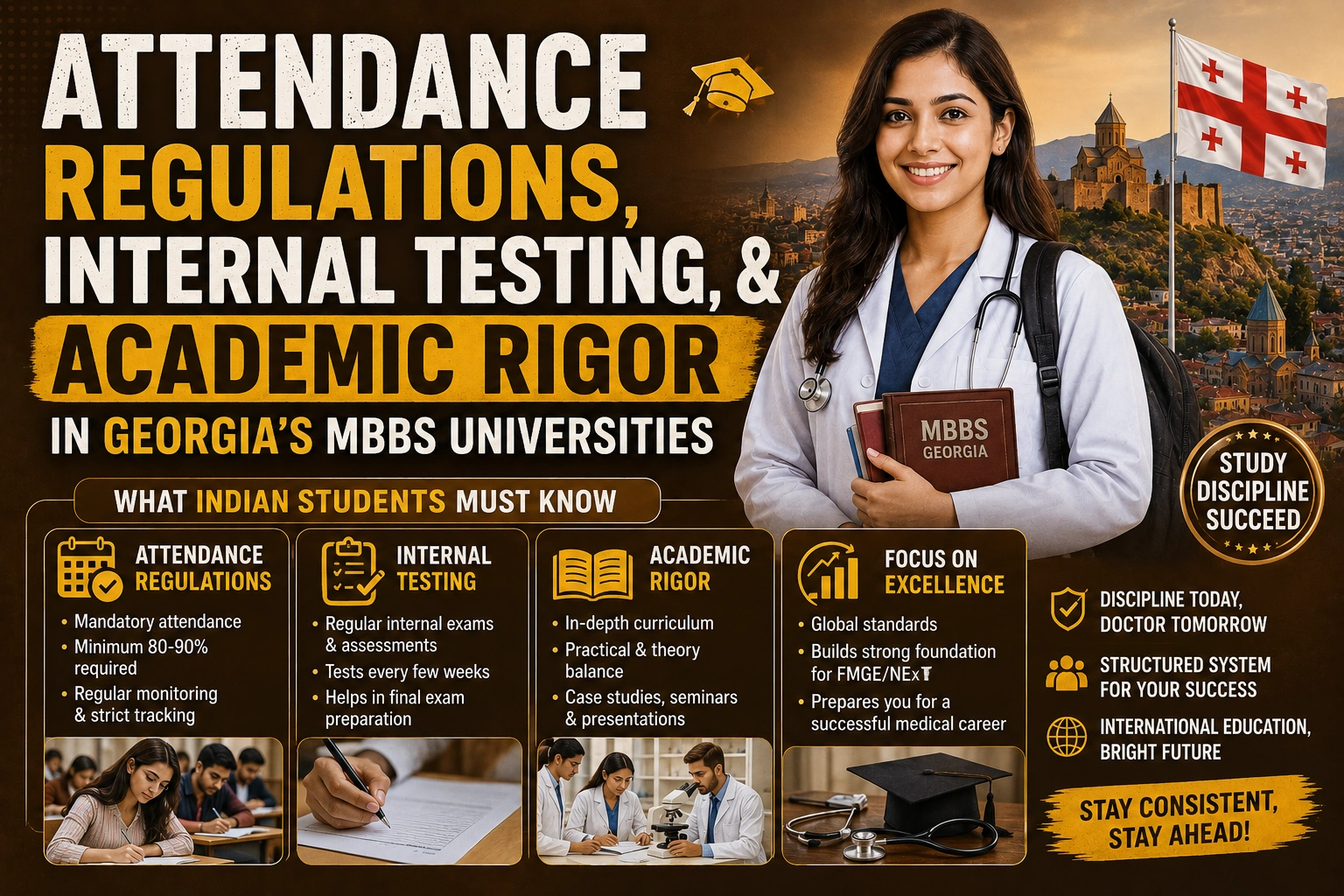
Medical universities in Georgia follow modern European education standards and focus heavily on discipline, practical learning, and continuous academic evaluation. Students planning to pursue MBBS in Georgia must understand that medical education abroad is academically demanding and requires regular attendance, practical participation, and strong study habits.
Before taking admission, students should clearly understand the attendance policies, internal testing systems, academic expectations, and overall rigor of Georgia’s MBBS universities. Proper awareness helps students prepare mentally and academically for the challenges of international medical education.
Why Georgia is Becoming Popular for MBBS
Georgia has emerged as a preferred study destination because it offers a balance of affordability, recognition, and quality education. Most universities provide internationally accepted medical degrees and modern infrastructure for practical learning.
Major Reasons Why Students Choose Georgia
- Affordable tuition fees
- English-medium MBBS programs
- Globally recognized medical universities
- Modern laboratories and hospitals
- Clinical exposure from early years
- Safe and student-friendly environment
- International student community
- Simplified admission process
Most universities are recognized by important international medical organizations such as the World Health Organization (WHO), the World Directory of Medical Schools (WDOMS), and the National Medical Commission (NMC).
Students planning to study abroad after qualifying medical entrance examinations should always verify recognition through the official NEET Official Website.
Importance of Academic Discipline in MBBS Programs
Medical education is considered one of the most academically challenging professional courses in the world. Georgia’s MBBS universities follow strict academic systems designed to train students with strong theoretical knowledge and practical medical skills.
Unlike some traditional systems where students mainly focus on final exams, Georgia’s medical universities emphasize continuous learning, regular assessments, and practical hospital training.
Students are expected to:
- Attend lectures regularly
- Participate in laboratory sessions
- Complete assignments on time
- Maintain clinical discipline
- Prepare consistently for internal assessments
The universities focus on building professional responsibility from the first year itself.
Attendance Regulations in Georgia’s MBBS Universities
Attendance policies are among the most important academic rules followed by medical universities in Georgia. Since medicine is a practical field, universities expect students to participate actively in both theoretical and practical sessions.
Minimum Attendance Requirement
Most universities require:
- 75% to 80% attendance in theory classes
- Nearly full attendance in laboratory practicals
- Mandatory participation during clinical rotations
Attendance records are maintained either digitally through automated systems or manually by faculty members.
Importance of Attendance
Attendance is important because medical education requires direct interaction with:
- Professors
- Patients
- Clinical demonstrations
- Laboratory practices
Students who miss classes regularly may struggle academically because many concepts in medicine require continuous understanding and revision.
Consequences of Low Attendance
If students fail to meet attendance requirements, universities may take disciplinary actions such as:
- Restriction from semester examinations
- Additional assignments
- Remedial practical sessions
- Repetition of missed clinical postings
- Delay in academic progression
Because of these strict rules, students pursuing MBBS in Georgia must maintain academic consistency throughout the course.
Practical Training and Clinical Exposure
Georgia’s MBBS universities place strong emphasis on practical medical training. Clinical exposure helps students understand real-world healthcare systems and patient management.
Practical Learning Areas
Students participate in:
- Anatomy laboratories
- Histology practicals
- Biochemistry labs
- Clinical simulations
- Hospital rounds
- Patient interaction sessions
Clinical rotations become more important during the later years of MBBS.
Importance of Clinical Training
Practical training improves:
- Diagnostic skills
- Communication abilities
- Case analysis
- Emergency handling
- Patient management
Students who actively participate in clinical training generally perform better in future licensing examinations and hospital practice.
Internal Testing and Continuous Assessment System
One of the defining features of MBBS education in Georgia is the continuous assessment model. Universities do not rely only on final examinations.
Instead, students are evaluated throughout the academic year.
Main Types of Internal Assessments
The assessment system usually includes:
- Weekly tests
- Monthly examinations
- Midterm exams
- Practical assessments
- Oral examinations
- Assignments
- Case presentations
- Seminar participation
- Viva examinations
These assessments are designed to monitor the student’s academic growth regularly.
European Credit Transfer and Accumulation System (ECTS)
Many Georgian universities follow the European Credit Transfer and Accumulation System (ECTS). This academic structure is widely accepted in European higher education.
Benefits of the ECTS System
The system helps students:
- Track academic progress
- Maintain international academic standards
- Improve learning consistency
- Build systematic study habits
The ECTS structure also supports international recognition of the medical degree.
Academic Challenges Students Face
Although Georgia offers quality education, students must be prepared for certain academic challenges.
Common Academic Challenges
- Strict grading systems
- Continuous testing pressure
- Language barriers outside classrooms
- Heavy medical syllabus
- Time management difficulties
- Competitive academic environment
International students often require time to adapt to the new educational system and study methods.
Importance of Self-Discipline
Success in MBBS depends greatly on discipline and self-management.
Good Habits for MBBS Students
Students should focus on:
- Daily revision
- Consistent note-making
- Time management
- Regular practical preparation
- Active participation in clinical postings
Medical education cannot be completed successfully through last-minute preparation alone.
University Support Services for International Students
Most medical universities in Georgia provide support systems to help international students adjust academically and personally.
Common Student Support Services
- Academic counseling
- International student departments
- Language support
- Orientation programs
- Hostel assistance
- Mental wellness support
These services help students adapt more comfortably to life and academics abroad.
Recognition and Licensing Eligibility
Recognition of the university is extremely important for future career opportunities.
Students should always ensure that the university is recognized by:
- NMC
- WHO
- WDOMS
Recognition allows graduates to appear for international licensing examinations such as:
- FMGE/NExT in India
- USMLE in the USA
- PLAB in the UK
- Other international medical licensing exams
Choosing a properly recognized university is essential for future medical practice.
Tips for Students to Succeed Academically
Students pursuing MBBS in Georgia can improve their academic performance by following disciplined strategies.
Important Success Tips
- Attend all lectures regularly
- Revise topics daily
- Practice clinical communication
- Improve medical terminology
- Participate actively in practical sessions
- Prepare early for licensing exams
- Maintain physical and mental health
Strong consistency throughout the course is more important than short-term intensive studying.
Why Georgia Remains Attractive for Indian Students
Georgia continues to attract Indian medical aspirants because it offers:
- Affordable education
- International recognition
- Practical medical exposure
- English-medium programs
- Modern infrastructure
- Safer student environment
- Globally accepted medical curriculum
Students who are serious about medicine and maintain academic discipline often build strong medical careers after graduating from Georgian universities.
Conclusion
Attendance regulations, internal testing systems, and academic rigor in Georgia’s MBBS universities are designed to maintain high international medical education standards. Students must understand that MBBS abroad requires continuous hard work, clinical participation, and academic responsibility.
Georgia provides Indian students with affordable medical education, practical healthcare training, internationally recognized degrees, and modern learning systems. However, success depends greatly on the student’s commitment, consistency, and willingness to adapt to a disciplined academic environment.
Before selecting any university, students should carefully verify recognition, licensing eligibility, clinical training quality, and academic structure. With proper preparation and dedication, MBBS in Georgia can provide excellent opportunities for building a successful international medical career.